
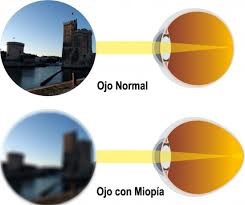


The short-sightedness It is a visual condition in which the patient experiences blurred vision when looking into the distance. This is because the cornea is very curved and the lens is very powerful, or because the eye is longer than normal.
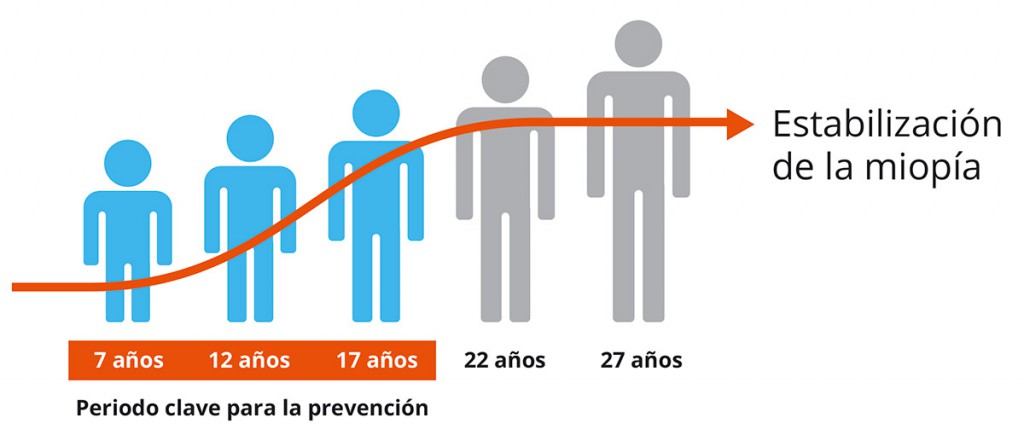
It is very important to be aware that short-sightedness progresses irreversibly during childhood and adolescence. That is why it is so important to take action during this period of growth.
Controlling myopia is important because of the consequences it can have. As the eye lengthens, the retina becomes thinner and stretches, leading to an increased risk of retinal conditions that can cause irreversible vision loss.
Source: Visión y Vida
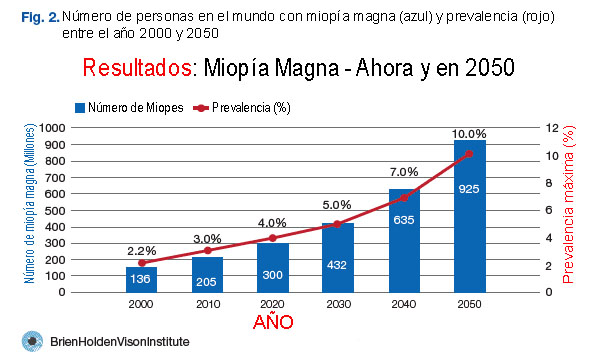
In recent years, high myopia (myopia of 6 dioptres or more) has been the most common condition amongst ONCE members.
In MAYTE OPTICS We offer a range of options for myopia control, which aim, on the one hand, to minimise the growth of the eye so that the dioptres increase as slowly as possible. These optical treatments are:
Some recommendations for preventing the onset of this type of short-sightedness are:
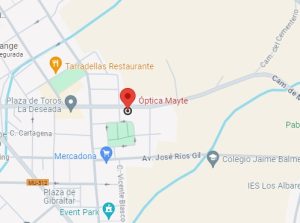
You’ll find us at Camino de Murcia, 174, where we have a fully equipped opticians’ centre covering more than 160m² to deal with any eye-related queries or problems.
| Monday | 10:00 – 13:3016:00 – 20:00 |
|---|---|
| Tuesday | 10:00 – 13:3016:00 – 20:00 |
| Wednesday | 10:00 – 13:3016:00 – 20:00 |
| Thursday | 10:00 – 13:3016:00 – 20:00 |
| Friday | 10:00 – 18:00 |
| Saturday | Closed |
| Sunday | Closed |
Camino de Murcia, 174, 30530 Cieza, Murcia – tel: 968 76 54 34 – contacto@opticamayte.es
| Cookie | Duración | Descripción |
|---|---|---|
| cookielawinfo-checkbox-analytics | 11 months | This cookie is set by the GDPR Cookie Consent plugin. The cookie is used to store the user’s consent for cookies in the "Analytics" category. |
| cookielawinfo-checkbox-functional | 11 months | The cookie is set by the GDPR cookie consent tool to record the user’s consent for cookies in the "Functional" category. |
| cookielawinfo-checkbox-necessary | 11 months | This cookie is set by the GDPR Cookie Consent plugin. It is used to store the user’s consent for cookies in the "Necessary" category. |
| cookielawinfo-checkbox-others | 11 months | This cookie is set by the GDPR Cookie Consent plugin. The cookie is used to store the user’s consent for cookies in the "Other” category. |
| cookielawinfo-checkbox-performance | 11 months | This cookie is set by the GDPR Cookie Consent plugin. The cookie is used to store the user’s consent for cookies in the "Performance" category. |
| viewed_cookie_policy | 11 months | The cookie is set by the GDPR Cookie Consent plugin and is used to record whether or not the user has consented to the use of cookies. It does not store any personal data. |
¿Te ayudámos?

 English
  Spanish